
Introduction
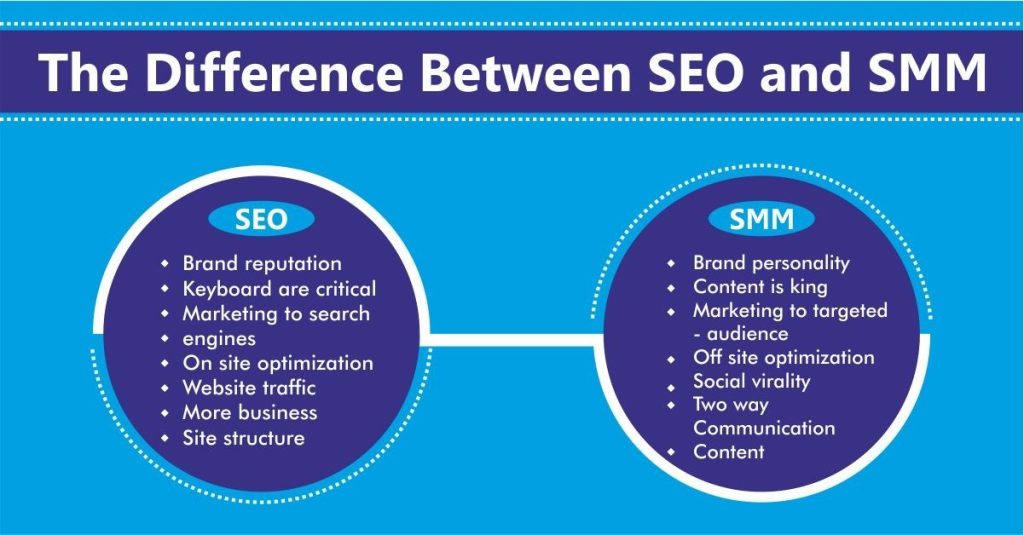
In today’s digital-first world, every business wants one thing: visibility. But with millions of brands competing online, simply having a website or social media page isn’t enough. That’s where Search Engine Optimization (SEO) and Social Media Marketing (SMM) come in. Both strategies help businesses reach more people, build trust, and ultimately drive sales—but they do so in very different ways.
If you’re a business owner, marketer, or entrepreneur trying to decide where to focus your efforts, this guide breaks down the key differences, benefits, and practical applications of SEO and SMM. By the end, you’ll not only understand each approach but also see how they can work together to boost your online presence.
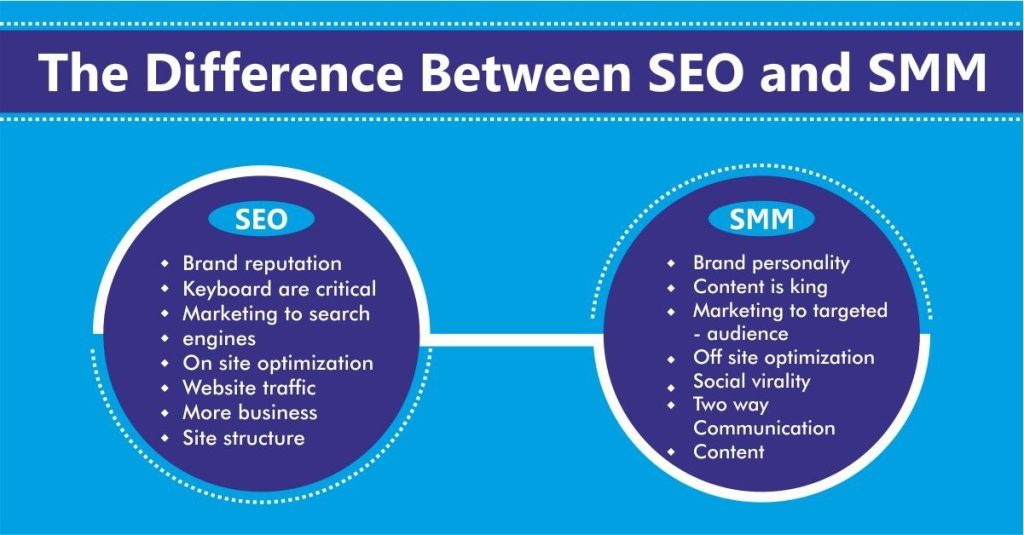
Understanding SEO (Search Engine Optimization)

SEO is the art and science of optimizing your website so it ranks higher on search engines like Google or Bing. When someone searches for “best coffee shop near me” or “affordable digital marketing agency,” SEO determines whether your business shows up on the first page—or gets buried under competitors.
How SEO Works:
- Optimizing website content with relevant keywords.
- Building high-quality backlinks.
- Improving website speed, security, and mobile-friendliness.
- Creating valuable content (blogs, guides, product pages).
Example: A local bakery publishing a blog post on “10 Creative Birthday Cake Ideas” might rank on Google, attracting potential customers actively searching for birthday cakes.
Understanding SMM (Social Media Marketing)
SMM focuses on using platforms like Facebook, Instagram, LinkedIn, and TikTok to engage with audiences, build brand awareness, and drive traffic. Unlike SEO, which waits for people to search, SMM allows brands to go where their audience already spends time.
How SMM Works:
- Sharing posts, videos, stories, and reels to connect with followers.
- Running paid ads targeted by demographics, interests, or behavior.
- Collaborating with influencers and micro-creators.
- Engaging with communities through comments, messages, and shares.
Example: A fitness trainer posting Instagram reels of workout routines while running Facebook ads offering free trial sessions to nearby users.
SEo and smm which Target Audience better
- SEO’s audience: People with clear intent, actively searching for solutions (e.g., “buy running shoes online”).
- SMM’s audience: People who may not be actively searching but can be inspired, influenced, or reminded about your brand while scrolling their feed.
Think of it this way: SEO captures demand, while SMM creates demand.
Key Differences Between SEO and SMM
| Factor | SEO | SMM |
|---|---|---|
| Goal | Attract people searching for solutions | Build awareness and engagement |
| Timeframe | Long-term (3–6 months for results) | Short-term (immediate reach with ads) |
| Cost | More upfront effort, lower ongoing cost | Continuous ad spend + content creation |
| Traffic Source | Search engines (Google, Bing) | Social media platforms (Instagram, Facebook, LinkedIn, TikTok) |
| Best For | Businesses needing steady, consistent leads | Brands seeking rapid awareness and community building |
Advantages of SEO
- High-quality leads – Visitors from search are already interested in your offerings.
- Long-term ROI – Once ranked, you can generate free traffic for months or even years.
- Builds authority & trust – Ranking high signals credibility to potential customers.
- Cost-effective – Unlike ads, clicks are free after optimization is done.
📊 Stat: According to BrightEdge, 53% of all website traffic comes from organic search, making SEO one of the most powerful growth channels.
Advantages of SMM
- Instant visibility – Paid ads can put your brand in front of thousands instantly.
- Community building – Helps brands engage directly with customers.
- Viral potential – A single trending reel or tweet can explode reach overnight.
- Targeting precision – Ads can be shown to very specific groups (age, location, interests).
📊 Stat: Over 4.9 billion people use social media globally (DataReportal, 2025), making SMM a massive opportunity for brand exposure.
Examples of Effective Strategies
- SEO Example:
An e-commerce brand writes in-depth product guides (“Best Smartwatches for Students in 2025”) and ranks on Google. This attracts buyers already searching for smartwatches, leading to higher conversion rates. - SMM Example:
A skincare company launches a TikTok challenge encouraging users to share their morning routines. The campaign goes viral, boosting both brand awareness and sales. - When Combined:
A travel agency writes SEO-optimized blogs (“Top 10 Beach Destinations in India”) while simultaneously sharing Instagram reels showcasing stunning visuals from those beaches. The blog captures search traffic, while reels engage a wider audience—working hand in hand.
Conclusion
Both SEO and SMM are powerful digital marketing strategies—but they serve different purposes. SEO builds a strong foundation for long-term, sustainable growth, while SMM provides the speed, engagement, and social proof needed in today’s competitive market.
At the end of the day, it’s not about choosing one over the other. Instead, the smartest businesses use both: SEO to capture intent-driven traffic, and SMM to build awareness and community. Together, they form a balanced digital strategy that drives visibility, trust, and growth.